


From the Madman’s Chaos to Sacred Restoration
By Bruno Sanchez

The Desecration of Man
Carl R. Trueman, Sentinel, April 2026
In May 2025, the Lord Mayor of Belfast unveiled a stained-glass window in City Hall depicting a young man in a T-shirt emblazoned with the slogan “Save Sodomy from Ulster.” The installation was presented as a celebration of inclusivity. At roughly the same moment, on the opposite end of the political spectrum, certain right-wing social media accounts treated the distress of migrant children—or the rehabilitation of discredited historical figures—as material for amusement. What unites these otherwise opposed gestures is not ideology but a shared exhilaration: the more sacred the boundary transgressed, the more potent the sense of agency it confers.
In The Desecration of Man: How the Rejection of God Degrades Our Humanity, Carl R. Trueman gives this impulse a precise and unsettling name. Our age is not merely 'disenchanted' in the familiar Weberian sense, emptied of mystery by bureaucracy and mechanisation. It actively delights in profanation. Transgression has become, in Trueman’s words, 'their primary task'— a shortcut to identity and influence in a world that no longer recognises anything as intrinsically sacred.
The symmetry of this condition across ideological lines is striking. The cultural left celebrates the dismantling of inherited sexual norms and the public reconfiguration of moral boundaries, while the online right, in its more extreme expressions, finds liberation in the gleeful violation of long-standing standards of decency. In both cases, mockery replaces reasoned argument, and cruelty masquerades as candour. Neither side, Trueman suggests, can claim the moral high ground. The erosion of human dignity is not partisan but civilisational.
Trueman invokes Friedrich Nietzsche’s parable of the madman to reveal the trajectory of modern culture. Having declared the death of God, the madman warns that humanity must eventually assume the divine prerogative and forge its own values—a challenge whose consequences, Trueman argues, have now come to pass. The disappearance of the sacred has not produced a neutral void; it has unleashed an ecstatic project of self-deification. Limits, obligations, and ends that were once received are now constructed, often in deliberate defiance of their former authority.
The mechanism by which this transformation has taken hold is clarified through Charles Taylor’s concept of the 'social imaginary,' the intuitive framework through which ordinary people apprehend the world before articulating explicit beliefs. For centuries, the Western imaginary was anchored in a relatively stable agrarian order. Time followed the rhythms of the liturgical calendar and the seasons; identity was rooted in enduring communities; belief in a transcendent, unchanging God felt natural and self-evident. Modern technology disrupted this equilibrium. Industrialisation, urbanisation, and successive revolutions in transport and communication collapsed distance and accelerated change, making flux the defining condition of experience. In such a world, self-creation no longer seems rebellious but necessary—the only coherent response to constant motion.
Digital technology has amplified this shift to an unprecedented degree. Social media platforms do not merely reflect culture; they reward provocation. Algorithms prioritise outrage, spectacle, and the calculated violation of norms because such content sustains attention. The result is a self-reinforcing cycle: each act of transgression demands escalation, and the pursuit of visibility drives ever more extreme performances. Within this economy, the human body itself becomes a site of display and manipulation, to be curated, modified, or even discarded according to the sovereign will.
Trueman writes with the precision of a historian and the urgency of a theologian. He moves effortlessly from Dostoevsky’s reflections in prison to the stained-glass window in Belfast, from Nietzsche’s marketplace to our algorithmically curated timelines. The book is compelling not merely for the force of its diagnosis but for its texture, the sense that these cultural currents have been long observed and are here finally made intelligible.
Superficial remedies cannot arrest this trajectory. The revival of interest in Christianity among certain intellectuals—whether in the “cultural Christianity” tentatively endorsed by Richard Dawkins or in Roger Scruton’s aesthetic conservatism—may signal recognition of what has been lost. Yet such gestures remain insufficient. An appreciation for Christianity’s moral or cultural fruits cannot sustain them without the doctrinal convictions that once nourished them. Without a substantive account of God and the human person, these efforts risk preserving only the appearance of meaning while conceding its foundation.
The implications extend beyond theology into the political realm. A liberal order grounded in the inherent dignity of the individual depends on a moral consensus that widespread desecration erodes. If dignity is no longer received but constructed—and therefore contestable—it cannot serve as a stable basis for rights or obligations. In a culture where transgression is valorised, even the concept of the human becomes uncertain.
For Trueman, the alternative is neither nostalgia nor critique alone but what he calls reconsecration. This involves the recovery of the sacred order through three interlocking practices: creed, cult, and code. Creed reasserts the doctrinal truths about God and humanity that ground dignity in creation rather than choice. Cult restores embodied, communal worship that situates life within a transcendent narrative. Code re-establishes moral formation as disciplined recognition of limits that are divinely given. Together, these practices offer more than beliefs; they provide a way of inhabiting the world that resists the centrifugal pull of autonomous self-creation.
The choice Trueman presents is stark. We may continue along the path opened by Nietzsche’s madman, embracing the exhilarating yet ultimately destabilising project of self-deification. Or we may undertake the more demanding work of reconsecration, acknowledging the human person not as a sovereign creator but as a creature whose dignity derives from a source beyond itself. In a moment captivated by its own capacity for disruption, the latter may prove the more radical course.
BRUNO M. SANCHEZ is a PhD candidate at The Southern Baptist Theological Seminary. His cultural commentaries have appeared in Founders Ministries and The Baptist Courier. At present, he collects books faster than he finishes them, with no change on the horizon.
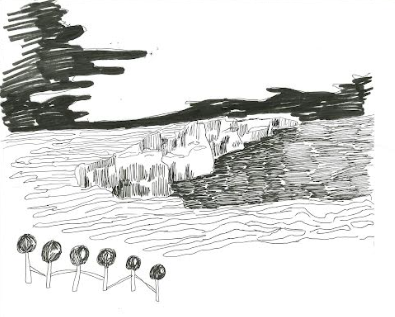
Art by Molly Lugsden


Trueman's diagnosis cuts deep, and this piece captures it well. The symmetry he identifies—the gleeful transgression on both left and right—is the part that stings most, because it exposes how thoroughly we've all absorbed the logic of the attention economy. We no longer argue; we perform. And the performance escalates precisely because nothing is sacred enough to halt it.
What I find most valuable here is the refusal to let "cultural Christianity" off the hook. You can't sustain the fruits without the roots. Creed, cult, and code aren't a nostalgia project—they're the only structure sturdy enough to resist the centrifugal pull of self-creation.
Para quienes siguen los sorteos, consultar la loteria de hoy puede formar parte de una rutina sencilla. Me parece positivo encontrar información clara y fácil de revisar, ya que permite conocer rápidamente los resultados. Además, tener los datos reunidos en un mismo contenido hace que la consulta sea mucho más cómoda.
Trueman’s sacred restoration reads like a modern Augustinian move, but he locates it in the public sphere rather than merely inward piety. I wonder whether that framing can persuade anyone who doesn’t already accept a divine referent for human dignity—or if it’s meant solely for believers.
<a href="https://nano-bananapro.com/
">nano-bananapro</a>
A really insightful and meaningful post that highlights how transformation can emerge from even the most challenging situations. The journey from confusion and chaos toward restoration is a powerful reminder of the importance of reflection, growth, and finding purpose. I appreciate how this piece encourages readers to look deeper and understand the value of change and renewal. For students working on thoughtful research or academic projects around similar themes, expert assignment help UK can offer helpful guidance and support when they need it. Thank you for sharing such an engaging and inspiring perspective.
I found Drive Mad surprisingly relaxing despite the chaotic vehicle physics. The short levels make it easy to play casually, especially when you only have a few minutes free.