


Novel, Analytic and Deeper
By Henry Barlow

The Coast of Everything
Guillermo Stitch, Sagging Meniscus Press, June 2026
If you want someone to read or hear your thoughts about literature today, your best bet is to scrupulously avoid talking about any specific books. Buzzy essays like James Marriott’s “The Dawn of the Post-Literate Society” (over 17,000 Substack likes) and Rose Horowitch’s “The Elite College Students Who Can’t Read Books” are the peaks of a vast range of discourse about how much people read, the way they read, and what they read. Much of this occurs on podcasts, giving you the opportunity to be told why the medium you are currently consuming is debased. Discussions like this have their place, and have been a perpetual feature of literary culture (if you want a picture of frazzled attention spans, read T. P. O’Connor’s description of late nineteenth-century newspaper readers in “The New Journalism”). My worry, however, is that without a thriving culture of reading and reviews, such discussion is disconnected from what it is we’re actually supposed to be preserving. Guillermo Stitch’s second novel The Coast of Everything deals with the thematic of post-literacy extensively, if not insightfully.
As if seeking to prove McLuhan and/or my framing device right, he’s promoting it in a bastion of post-literacy discourse, Substack, where he describes the novel as a ‘love letter to the story-within-a-story structure.’ Its framing story involves a young girl, Clara, being carried by her friends to an ‘unveiling’ – of what, we’re not entirely sure (10). To pass the time, she tells them a story. Then within that story someone else starts telling a story, and so on and so on. Each story has its own style, with varying degrees of indebtedness to other writers – one is a Raymond Chandler homage, one is meant to be told by Charles Dickens’ ghost yet features moments of fragmented interior monologue, while the longest one, ‘The Tale of the Three Voyages,’ is modelled on the Thousand and One Nights. What unites these stories is that they all occur in societies in which literature is under threat, either from a government or new technologies. Such a theme, as mentioned above, risks dissociated abstraction from literature. This is a particularly unfortunate quality in a work of actual literature.
The first story, a Chandler homage called 'The Tale of the Enchanted Road,' concerns a society in which books have been banned, yet writing is used as a fuel source for cars that drive on the ‘Litera-Track.’ This is facilitated by a company called Gripping Tails, whose boss gives us clichés that will not be going anywhere, speaking of the company’s style of ‘Applied Lit’ as a ‘Second Enlightenment’ (16). Billy gets into trouble with Gripping Tails since he’s part of a clandestine network called Gilgamesh that distributes literature, the participants of which are annoyingly described as 'lit' (55). If this sounds stupid to you, you should trust your first impression, and save yourself from Stitch’s embarrassing attempts at rendering screen-mediated life:
He’d been too busy checking his tab every few minutes to listen very carefully to Murphy’s presentation. He took it out and looked at it again. No notifications. It had been four days since he’d had anything from her – the longest ever. The two last messages he had had were requests for him to stop contacting her. (19)
Thudding prose. Are there two more ungainly words in English than 'had had?'
Billy’s in the dumps because his love of literature has alienated his girlfriend, whose brother Vince inducted Billy into Gilgamesh. Vince is the narrator of the next story, which he tells Billy in a diner. It largely centres around Charles Dickens’ ghost appearing in Vince’s room, rendered as a heavy-drinking frat bro:
He giggled. “Seriously, dude—”
“Just … please,” my fists were clenched, “please, don’t do it again.”
“Whatever you say, bro,” said Charles Dickens. He jiggled his beer can at me. (105)
The above is as good a specimen as any of Stitch’s inconsiderable talents for dialogue, which are on display again when Dickens expresses his disdain for Vince’s efforts at writing: ‘It was like a crime against art or something, you know? An assault on beauty itself. Having read it, I feel demeaned, and that’s not what you should be going for, as a writer’ (120). You can practically see Stitch adding the clauses in an effort to make it sound “natural.” Dickens is inspired to create his own story, “The Tale of the Isle of Truth,” which he reads out loud to Vince.
This story is a Dickens pastiche, the prose attaining to a somewhat tolerable sentimentality, as in ‘a smile on his perfectly sanguine, ruddy face’ (129). This sometimes devolves into the cloying, but then again so does Dickens. The character we have the most direct access to, the stationmaster Jasper Fafl whose petty monologues appear intermittently, is an unctuous Uriah Heep stand-in. The central characters, archivist Arenaceous Nell and his daughter Lil, lack any clear motivation or purpose, creating a somewhat interesting disjunction between the story’s sentimental prose style and its pessimistic content. Sadly, this is also evidence that Stitch has aped Dickens’ signal vices without his great virtues, as vivacity of characterisation is not abundant – I challenge the reader to come away with a strong image of Mr and Mrs Cyre, while many characters err on the side of single-attribute cutouts (especially the attribute of hunger, afflicting a few of them). Returning to Arenaceous and Lil, I said they don’t have a clear motivation, yet it would be more accurate to say that they don’t have a motivation sufficiently particular to define a character. For, the Second Enlightenment has become a ‘Third Enlightenment’ (205), administered by ‘The Magistracy’ whose motto is ‘Beauty is Utility’ and who are opposed by ‘the resistance’ which Lil seeks to join. I would like to think the actual ghost of Dickens would be slightly more imaginative.
The characters live on an outpost which intercepts potentially corrupting literature before it can enter the Magistracy’s domain. In their meetings, Lil plays a series of transmissions recorded by a Magistracy soldier involved in cleansing literature, whose wife is put in a psych ward after she starts reading the forbidden material he takes home. He tells her a story to calm her down, and thus begins the final section of Stitch’s book (before, naturally, all the stories which have already begun are ended). “The Tale of the Three Islands” is a sort of shaggy dog-cum-Thousand and One Nights story, in which the hapless private detective Liam is searching for the billionaire Sherry Zade’s sister Doonah. He goes from California to Tangiers to Libya to Cairo, not really searching for Doonah but managing to find her by getting embroiled in unrelated side quests. Fittingly, Stitch treats us to some Elder Scrolls-tier dialogue:
“You are insane?” said Ali. “Do you know how much money? He could feed his whole family on that for a month if so inclined.”
“I don’t really care about the money,” said Liam. “It isn’t mine.”
“I am very happy to meet you,” said Ali. (567)
I complain, as ever, yet this episode is home to the novel’s best writing, like when Liam closes his eyes before a bird cage and sees ‘highlighter hues populating and repopulating the grid, a neurosynaptic portrait in serrated crescents… conjuring… the phoenix rendered in a primary-coloured Tetris of plume, bill and blinking eye’ (446). Take out the mention of ‘highlighter,’ ‘neurosynaptic,’ and ‘Tetris’ and it’s a little derivative of twentieth-century literary impressionism, but it has a sense of vivacity and rhythmic movement. A similar remark applies to the Joycean image of ‘high lamps leaning in for the sweet release of their piss light’ (458).
Yet not even Joyce could redeem the story’s opening, where Stitch situates us in contemporary California with dazzling descriptions like ‘the closest you got to the ordure of commerce down here was a monstrously overpriced keto breakfast’ (338), while another restaurant is ‘where you got your keto, macro, raw food and egg-white omelettes’ (341). As my references indicate, Stitch can hardly go three pages without giving us a cliché – this time, the same one twice. I’d rather take five more mentions of keto, however, than be told about ‘the inevitable Pilates place and… yoga studios’ (341). Should a widespread literary culture be reborn, it will not grow from soil so devoid of imagination.
In this tale it’s a private corporation, rather than a government, that inhibits people’s abilities to read. The subtlety of Stitch’s description does not improve with this change, as the Zade software company wants to inhibit ‘novel, analytic and deeper forms of thought’ in order to fix ‘your attention where it can see it and therefore direct it towards desirable outcomes. Scrolling, mainly’ (541). You know when you finish a book, and your mind just buzzes with novel, analytic and deeper forms of thought?
The most formally innovative sequence in the novel is when Liam finds himself scrolling, disjunctive messages overlapping one another: ‘Thanks for making me acquainted with calories are a lie. Beautiful fusion of choral music with unique film of sea creatures not often seen.’ (429). The sequence’s form, however, is wholly self-contained, isolated from other parts of the novel. Liam, who elsewhere finds it hard to read the One Thousand and One Nights, talks like a late-twentieth-century person, as does everyone else in the novel. For all his handwringing about the “post-literate society,” for all his clichés of mysterious forces talking literature away from people due to its “danger” (‘in the untrained, the materials were likely to cause severe symptoms ranging from mental anguish to physical pain’ (157)), Stitch is fundamentally uninterested in how it feels to have a mind starved of literature. Sherry says her upbringing involved enforced exposure to social media, yet her speech bears none of its rhythms. Billy and Jane both text each other in typos (“jane. am at ur dor. wer r u?”) – would that be the only effect of books being banned or swamped by social media? We all know this isn’t the case, but Stitch doesn’t register much else.
The novel is inadequately self-reflexive about another mode of communication, so distant from early textualised social media and now reappearing in ghostly form through podcasts and reels – oral storytelling. When Clara has finished her stories, we are told ‘A sadness overcame [her] as she lapsed into silence, having said all she was able to say. There was no more story and their little party had not yet made it to the top of the hill.’ She then worries about whether her friends can bring her to the top, reflecting ‘the stories she had told, their aftereffects must be enough now. All she had was hope’ (713). Stitch has a post aligning this with Shaharazad in the Thousand and One Nights, but I think the more relevant intertext is his own description of The Coast of Everything: ‘At any given point during the last ten years I have been writing a tale that owes the very deepest debt to other tales I have either written or intend to, that is born in them and that births them.’ Both Stitch and Clara see their stories as transmissions of something in their head – Clara’s storytelling becomes an effort to maintain her own hope rather than a shared experience with her friends, Stitch’s stories are indebted to each other. Compare this to Faulkner’s Absalom, Absalom, a novel which constantly attends to how even stories told by narcissists are told in social spaces, inflecting and inflected by the air around them.
The book is notionally concerned with stories, and with their absence from the contemporary world, but it is largely unmoored from the concreteness of storytelling, writing, or technology. Literature thus becomes so attenuated as to claim only ‘novel, analytic and deeper forms of thought’ as its value. Perhaps the age we are entering is not the 'post-literate age,' but the 'discourse about a supposed post-literate age' age. I somewhat regret that my review has contributed to that discourse.
HENRY BARLOW is still trying to write a good bio.
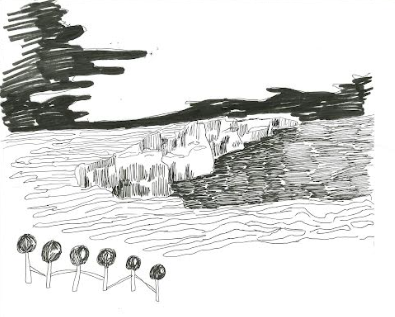
Artwork by Fatima Butt


What makes this article enjoyable is its simple presentation and useful information. The writer has explained the subject in a way that does not require readers to have extensive background knowledge. I also appreciate the logical structure because it helps keep the important points clear. kolkata fatafat tips like this are useful for people who want to understand something quickly while still gaining meaningful knowledge. Overall, I found the content engaging and would recommend this style of writing for informational topics.
A good networking article should make technical topics easier to understand, and this one does that well. Anyone researching 10.0.0.0.1 can find useful information about router access, configuration, and basic network management without unnecessary complexity.
I found this article informative and appreciated the simple way the subject has been explained. The information is easy to follow, and the overall structure makes the content feel organized. I especially liked that the article provides useful details without overwhelming the reader. This can be helpful for anyone who wants pk365 to understand a topic before doing further research. Thank you for sharing this resource. I enjoyed reading it and found several points that were worth remembering.
Diego consultó detalles sobre filmapp y encontró una explicación sencilla. La información incluye aspectos técnicos, dispositivos compatibles y algunas soluciones para problemas habituales durante el uso.
Encontrar información clara sobre los sorteos siempre resulta conveniente. La publicación permite consultar datos relacionados con la lotería nacional y revisar resultados de una manera sencilla. Además, la organización del contenido facilita la búsqueda y permite conocer rápidamente las novedades que pueden interesar después de cada jornada.